
Digital Transformation of PAN-India Vending Machine Operations for Dwija Food
How UpBuff replaced Dwija Food's fragmented Excel-and-email operations with a centralized IoT cloud portal and a dual-role mobile app — delivering real-time visibility, asset lifecycle tracking, and field-service automation across 1,200+ smart vending machines PAN-India.
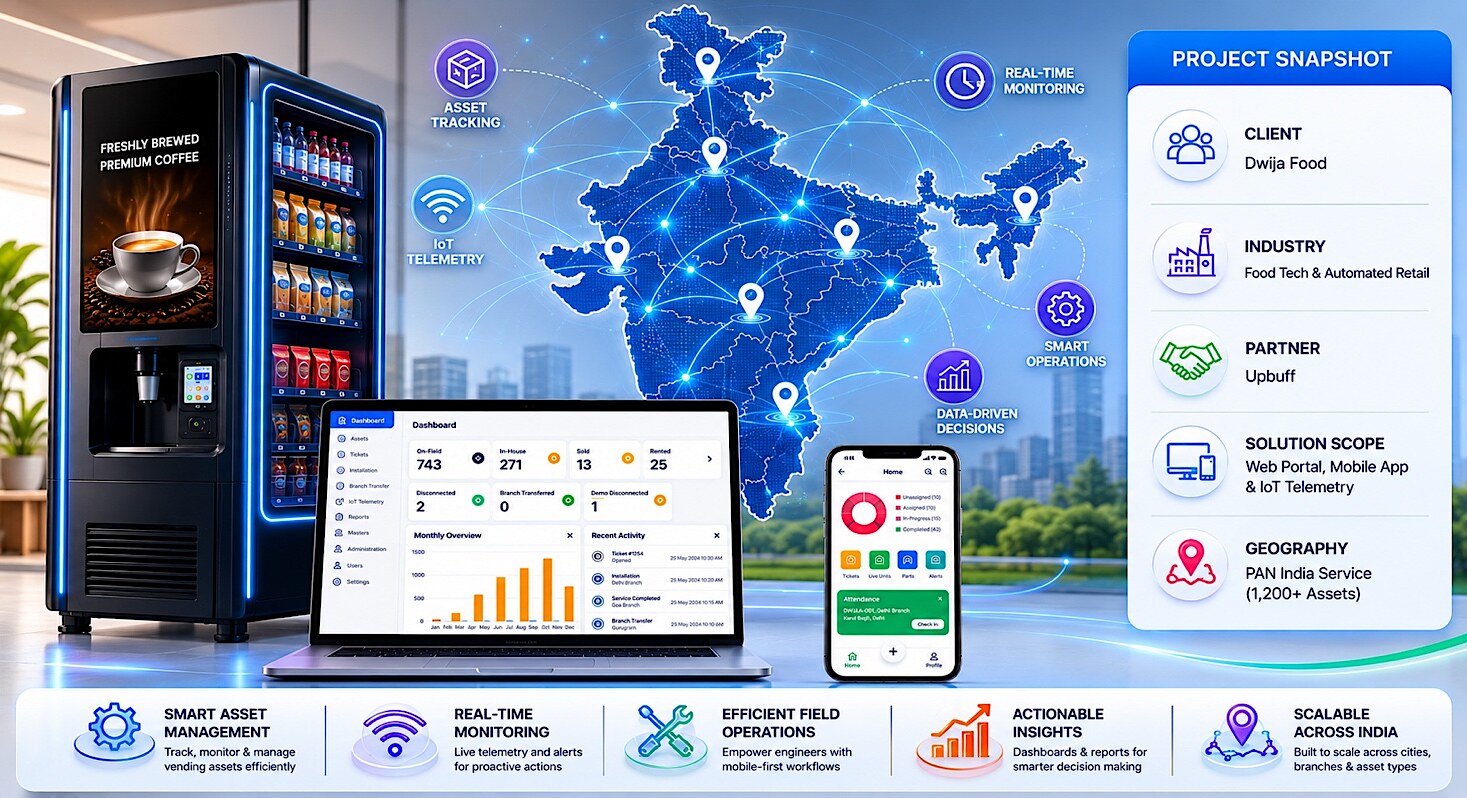
| Client | Dwija Food |
|---|---|
| Solution Provider | UpBuff Technologies |
| Industry | Food & Beverage · Automated Retail (Smart Vending) |
| Geography | PAN India |
| Assets Managed | 1,200+ smart vending machines |
| Business Model | Outright purchase & customized rental / lease contracts |
| Solution Scope | Centralized cloud portal, dual-role mobile app, IoT telemetry |
| Solution Delivered | IoT operations dashboard, asset lifecycle tracking, field-service ticketing & mobile dispatch, branch transfers, commercial billing automation |
| Systems Replaced | Excel sheets, email, WhatsApp, standalone billing & service-desk tools |
Executive Summary & Context
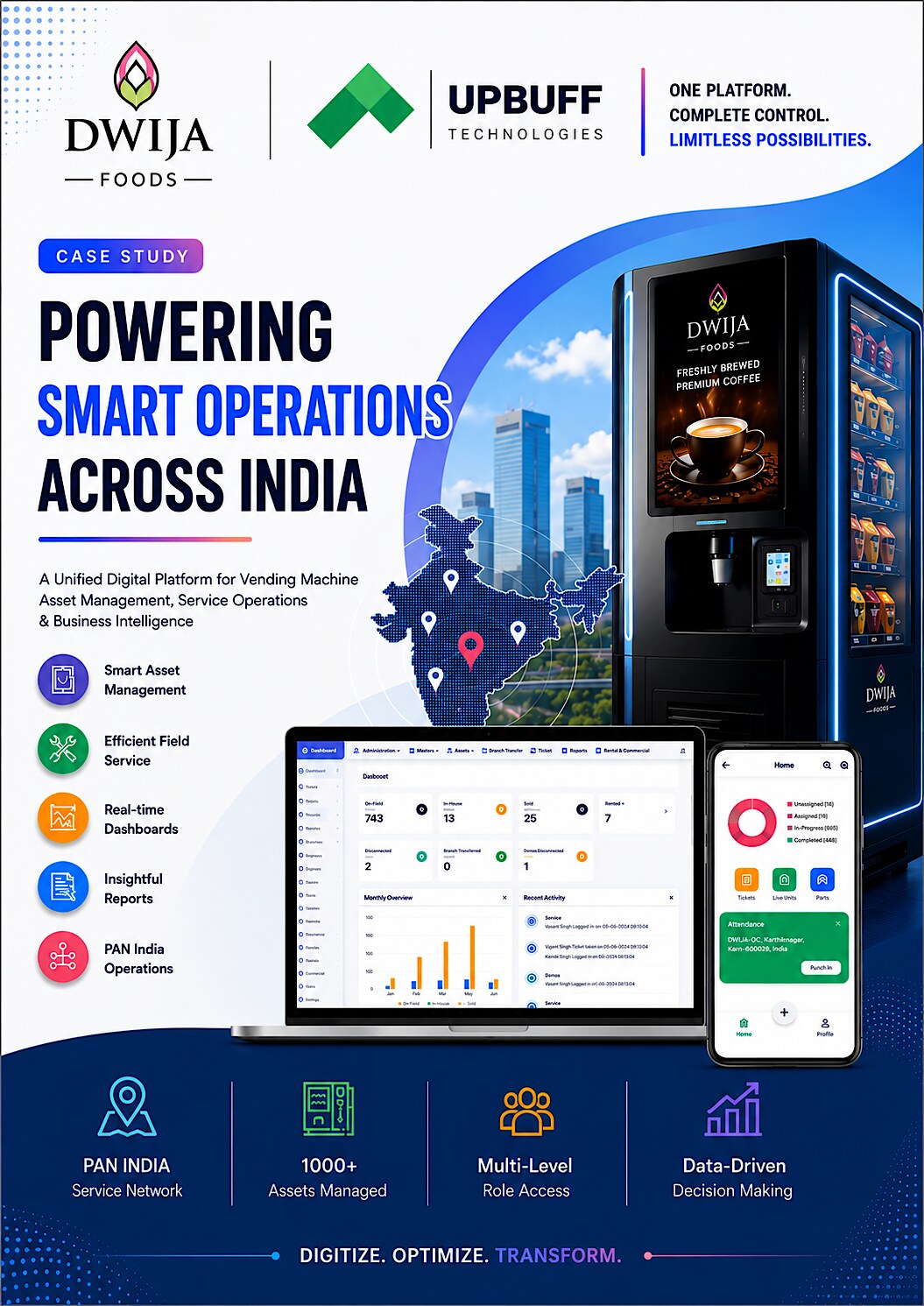
Dwija Food is a leading automated food and beverage retail service provider in India. The company deploys an array of smart vending machines across high-density corporate offices, industrial corridors, and institutional sites. To accommodate diverse client requirements, Dwija Food utilizes a multi-model business structure, allowing corporate partners to either purchase vending machines outright or lease them under customized rental contracts.
Operating on a PAN-India scale with over 1,200 assets requires rapid maintenance responses and continuous replenishment of ingredients (such as cups, tea, and coffee) to ensure client satisfaction and recurring revenue. To consolidate and modernize these operations, UpBuff developed a centralized cloud portal and a dual-role mobile application. By replacing disparate legacy software, this integrated IoT system offers real-time visibility into asset statuses, automates commercial billing, and coordinates field engineers to optimize response times.
Legacy Operations & Core Challenges
Prior to this digital transformation, Dwija Food managed its national operations using local Excel sheets, email communication, and basic standalone tools. This fragmented infrastructure created major business risks as the scale of deployed assets grew:
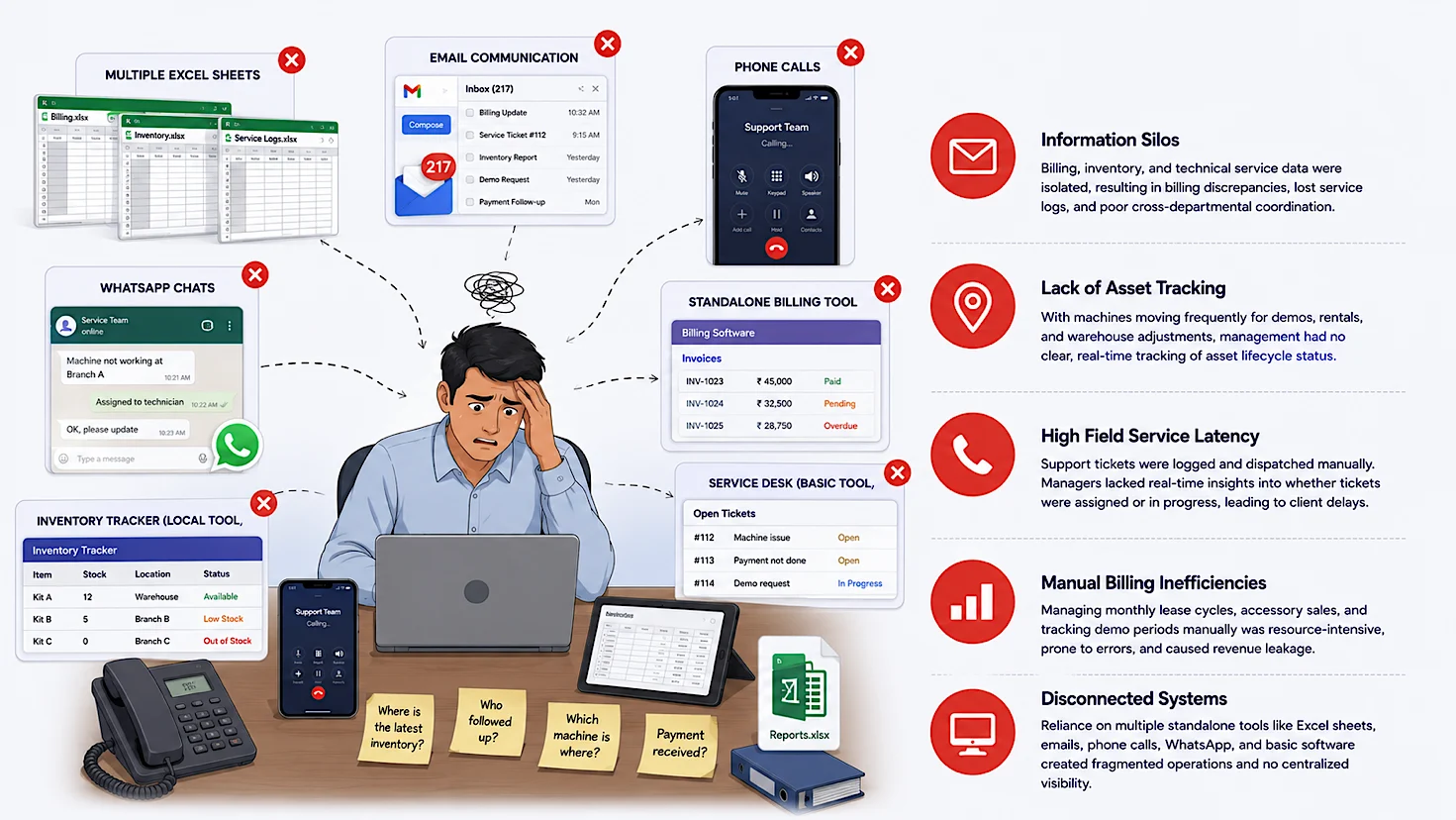
- Information Silos: Billing, inventory, and technical service data were isolated, resulting in billing discrepancies, lost service logs, and poor cross-departmental coordination.
- Lack of Asset Tracking: With machines moving frequently for demos, rentals, and warehouse adjustments, management had no clear, real-time tracking of asset lifecycle status.
- High Field Service Latency: Support tickets were logged and dispatched manually. Managers lacked real-time insights into whether tickets were assigned or in progress, leading to client delays.
- Manual Billing Inefficiencies: Managing monthly lease cycles, accessory sales, and tracking demo periods manually was resource-intensive, prone to errors, and caused revenue leakage.
- Disconnected Systems: Reliance on multiple standalone tools like Excel sheets, emails, phone calls, WhatsApp, and basic software created fragmented operations and no centralized visibility.
System Architecture & Role-Based Access Control
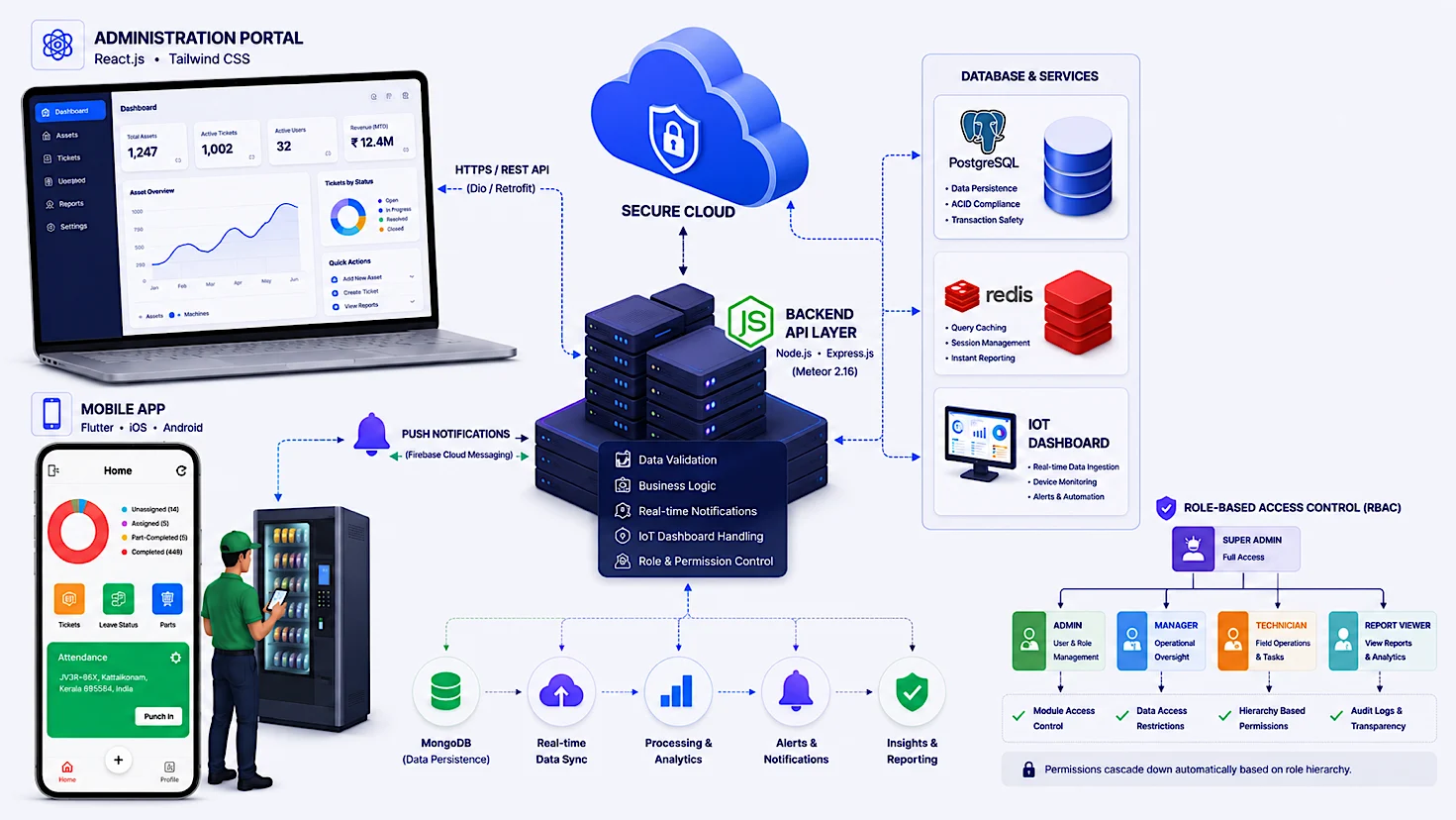
To address these hurdles, UpBuff engineered a robust, multi-tier software ecosystem.
- Administration Portal: Provides a centralized platform for managing users, assets, service operations, and business activities.
- Business Processing Layer: Ensures smooth handling of workflows, validations, notifications, and real-time updates.
- Data Management: Maintains secure and centralized storage of operational data, enabling quick access to reports and analytics.
- Mobile Application: Empowers field teams to manage tickets, update service activities, and access information on the go.
To secure operations, a strict Role-Based Access Control (RBAC) hierarchy was configured. System access permissions cascade down automatically, ensuring team members only access modules required for their roles. This segregates administrative control from field execution while maintaining full data transparency for regional management.
Platform Modules in Action
1. IoT Operations Dashboard
The web portal features a comprehensive IoT-driven Operations Dashboard functioning as the central command center. IoT-enabled vending machines constantly ping the server to report their status, allowing immediate discovery of offline or missing assets.
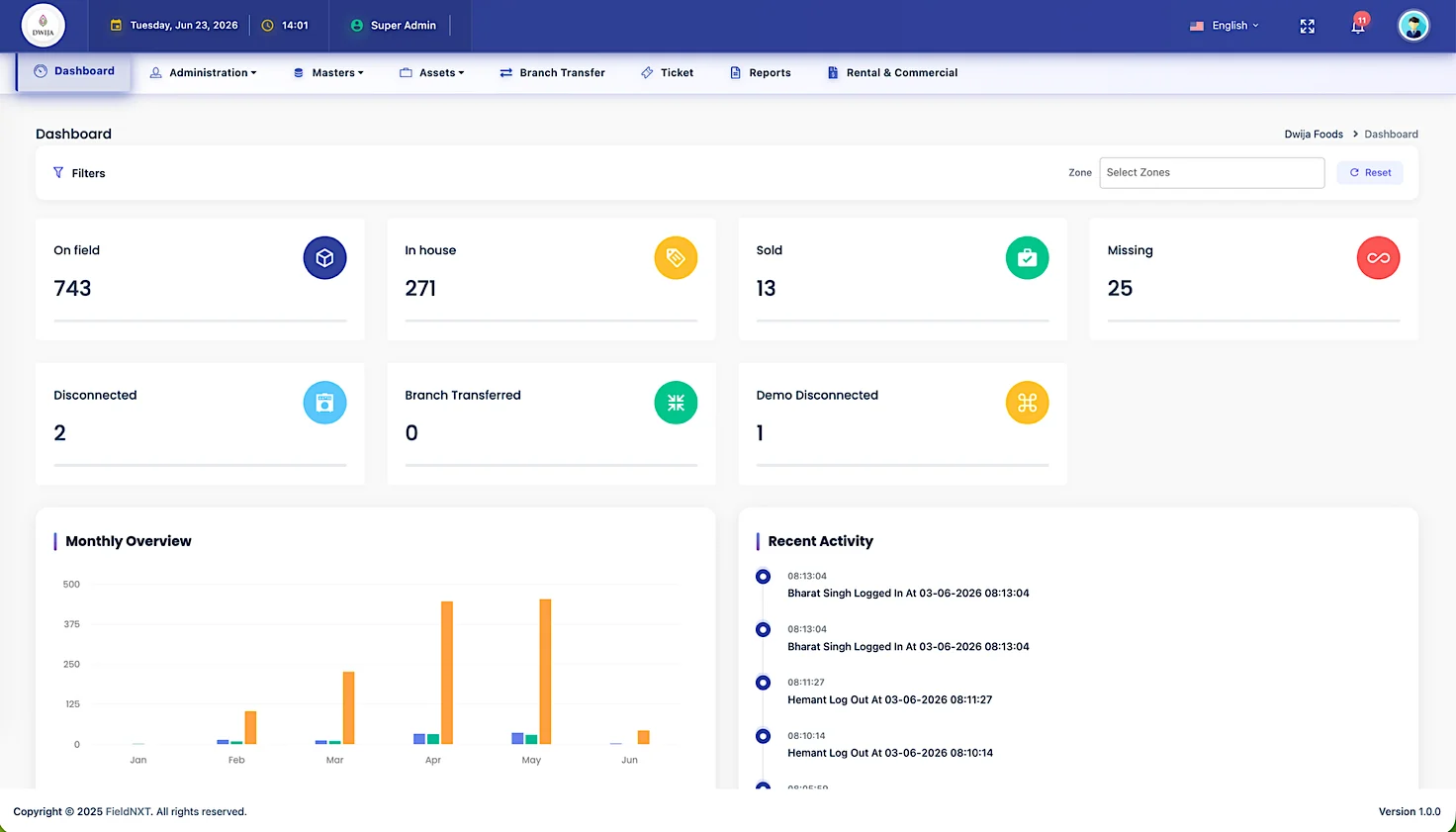
- High-level metric cards track nationwide statuses: On-field, In-house, Sold, Missing, Disconnected, Branch Transferred, and Demo Disconnected.
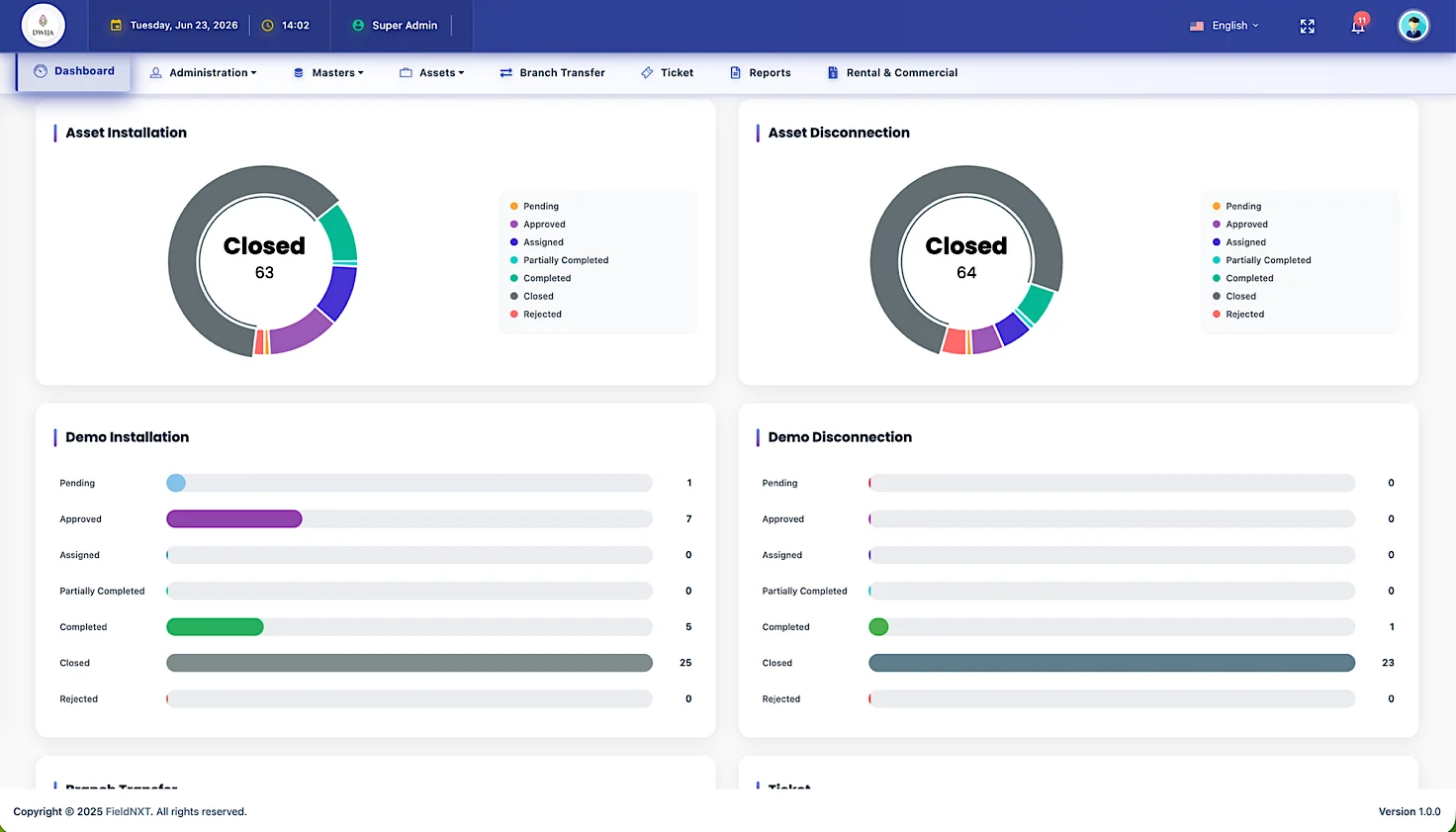
- The dashboard aggregates telemetry into visual components like monthly overview bar charts, dynamic doughnut graphs, and interactive recent activity logs.
- Users can filter metrics by zone for localized visibility into machine performance and active support tickets.
2. Asset Lifecycle & Accessories Inventory
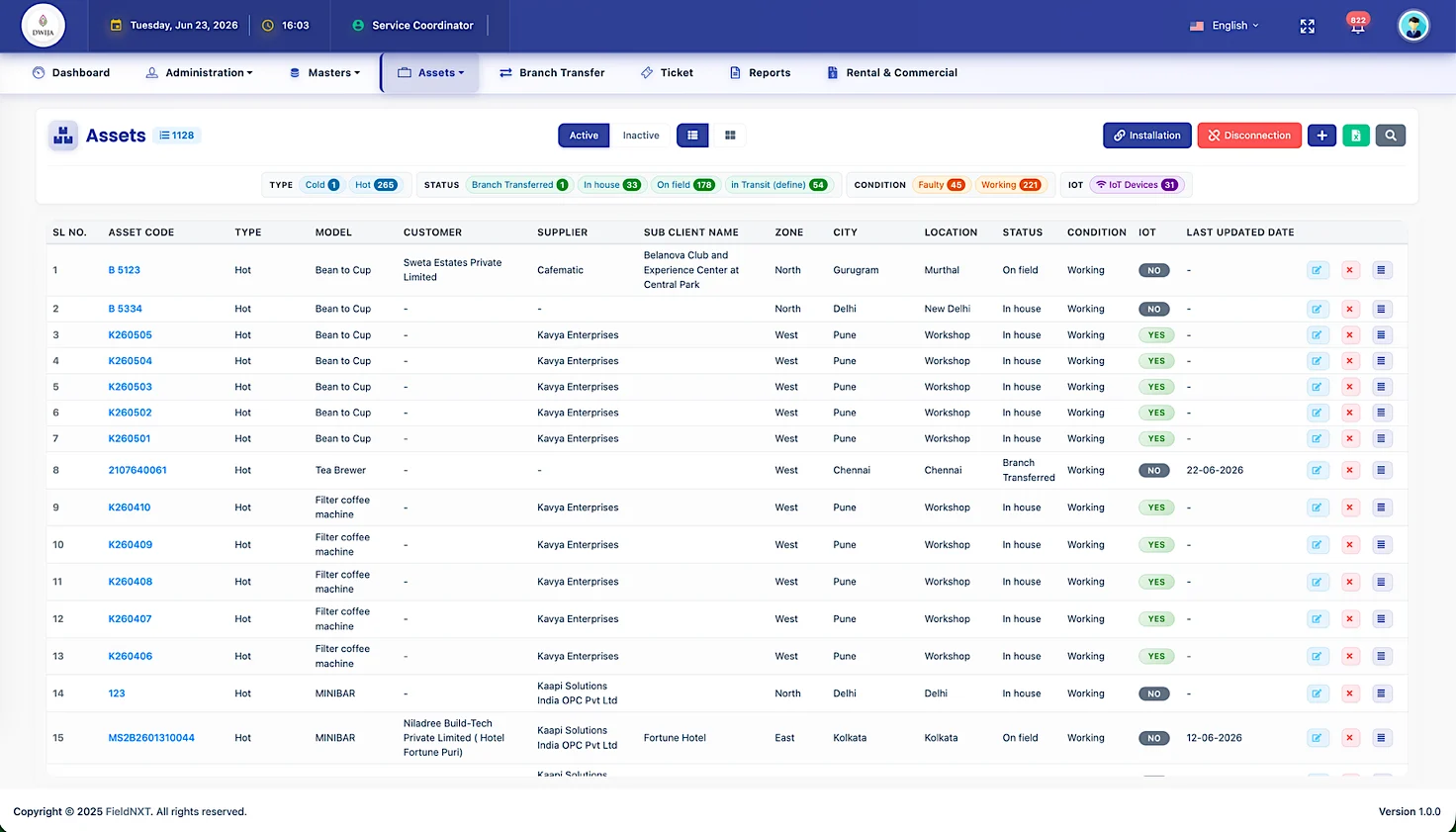
The Asset module maintains a unified catalogue of all deployed vending machines.
- An advanced filter matrix allows users to query inventory by machine type, deployment status, condition, and IoT status, enabling proactive repair coordination.
- The system tracks accessories (models, serial numbers, suppliers, locations) and integrates spare parts into the master inventory, ensuring field engineers have necessary supplies to minimize downtime.
3. Service Ticketing Lifecycle & Mobile Dispatch
UpBuff designed an end-to-end ticketing system integrated with the dual-role mobile app to modernize support.
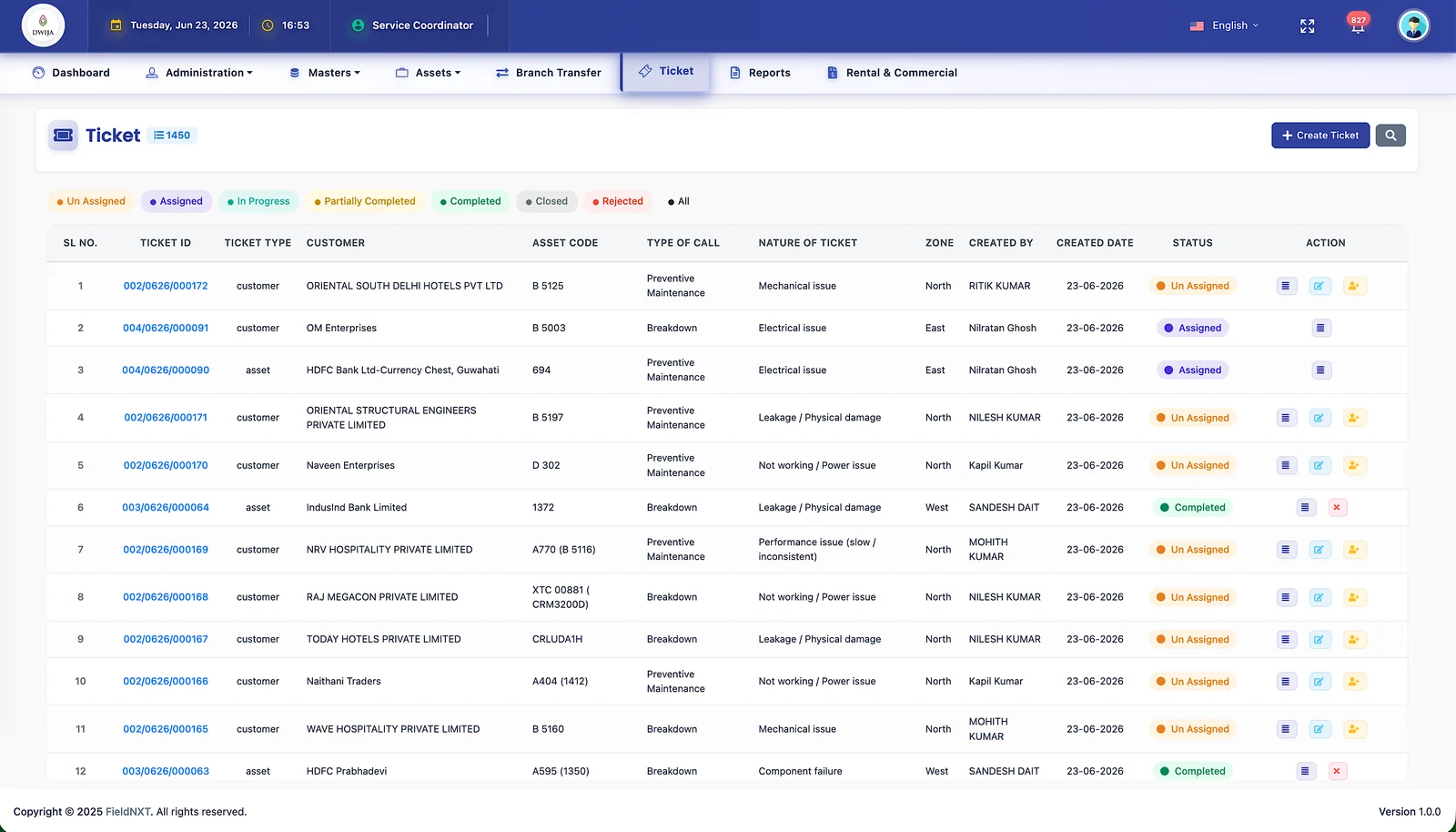
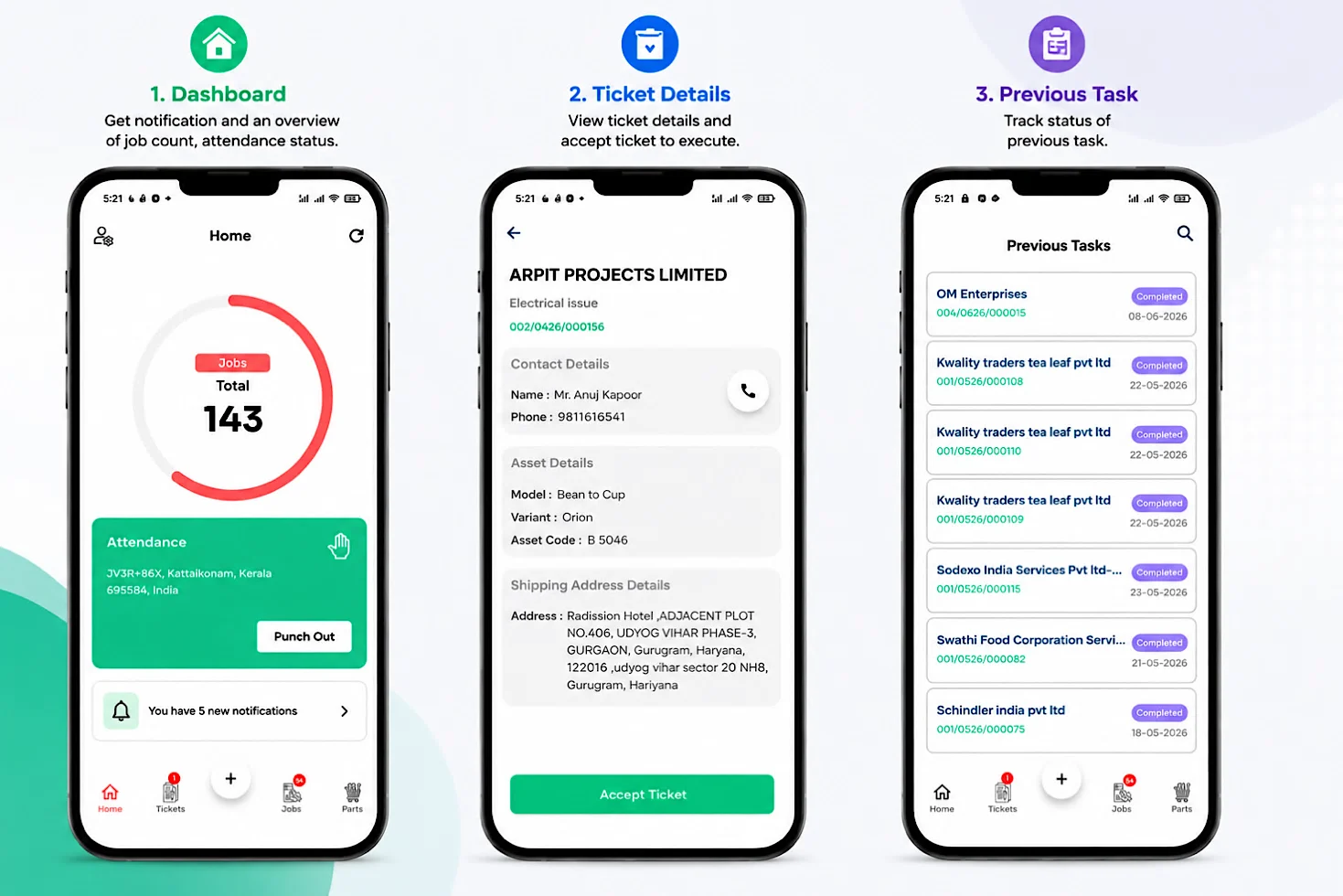
- The Workflow: Customer Request → Ticket Created → Manager Assignment → Engineer Acceptance → Site Visit → Work Execution → Completion → Closure.
- When a complaint is logged, a ticket is created through the portal and placed in the unassigned queue. Managers review pending tickets and assign them to the appropriate Engineers via the app.
- Engineers receive push notifications, accept tickets, log repair details, request accessories, and update statuses in real time, drastically reducing repair latency.
4. Branch Transfers & Logistics Management
Moving machinery between cities requires strict validation to prevent loss. The secure Branch Transfer module streamlines this process.
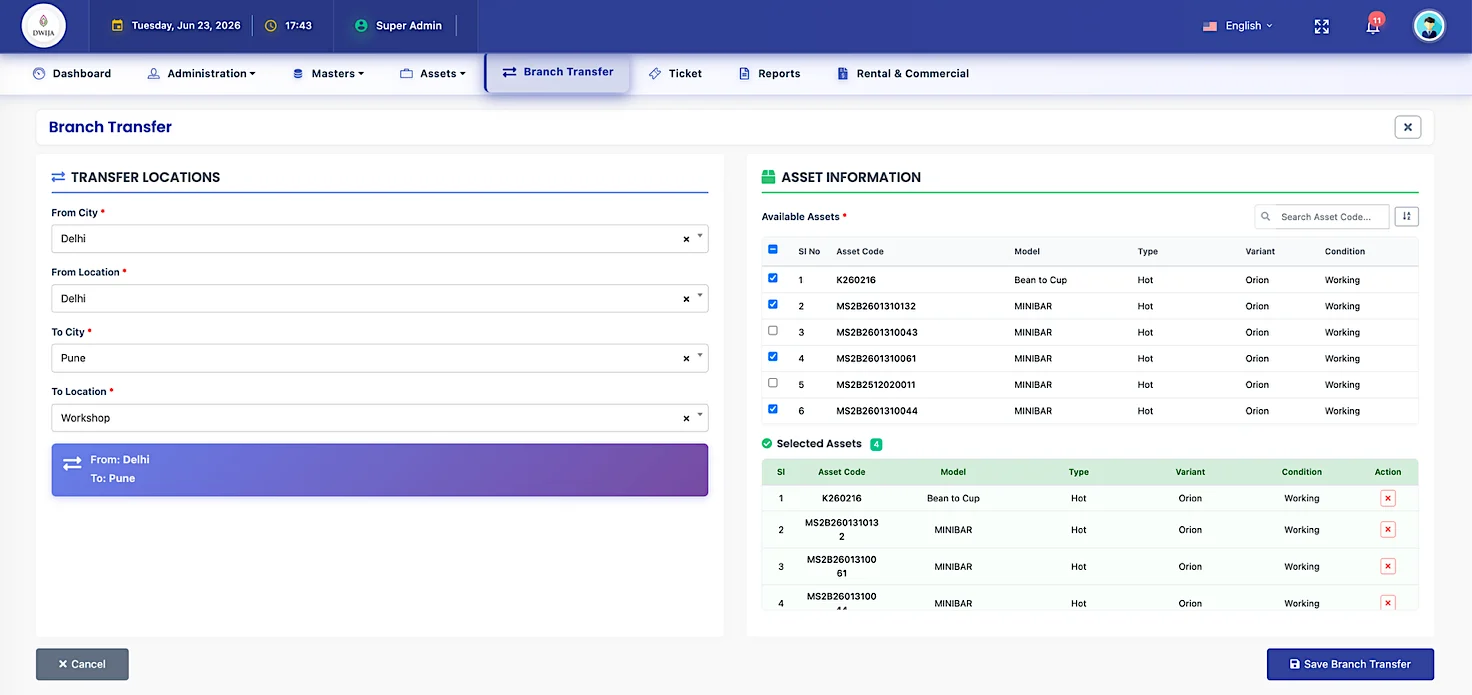
- Operators specify source and destination locations, and the system displays available assets.
- Selected assets are verified and locked to prevent double-allocation.
- Transit manifests are generated, tracking items through ‘Assigned’, ‘Approved’, and ‘Closed’ statuses.
- This automation reduces transport discrepancies and improves inventory accuracy.
5. Commercial Billing Automation
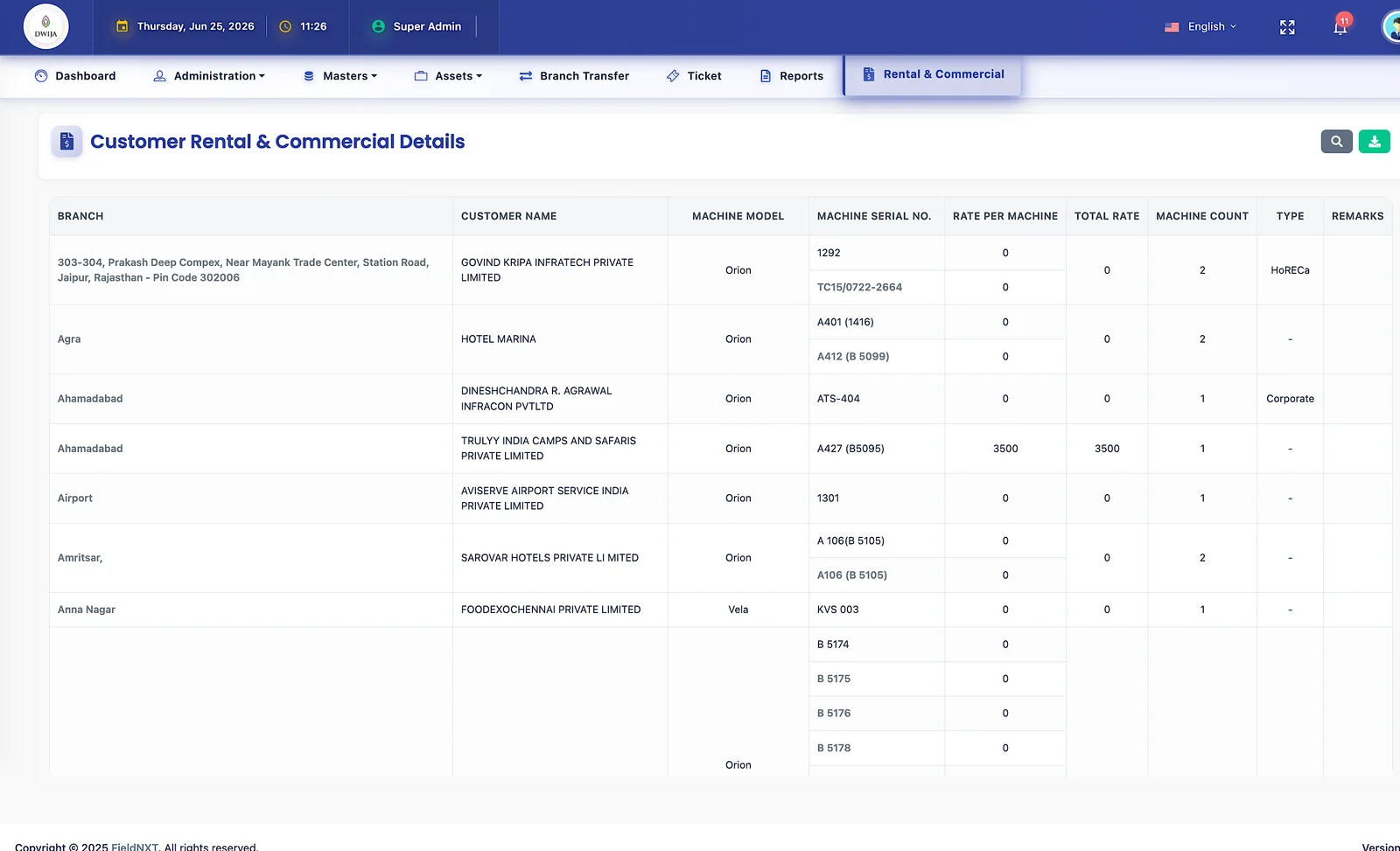
The Rental & Commercial module provides centralized visibility into customer rental deployments across locations. Users can track machine models, serial numbers, machine counts, rental rates, customer categories, and commercial agreements from a single dashboard. This enables better monitoring of deployed assets, simplifies commercial tracking, and improves operational transparency across the rental business.
Business Impact & Results
The UpBuff platform transformed Dwija Food’s nationwide service operations by replacing multiple disconnected systems with a centralized digital ecosystem. Today, management has complete visibility into assets, field service operations, commercial activities, and business performance through a single integrated platform.
Key Business Outcomes
🚀 Unified Digital Platform — Consolidated multiple software applications, spreadsheets, emails, and manual processes into a single centralized system.
📍 Complete Asset Visibility — Enabled real-time tracking and lifecycle management of over 1,200 assets deployed across India.
⚡ Improved Field Service Efficiency — Streamlined ticket assignment, engineer dispatch, and service execution through mobile-enabled workflows and real-time status updates.
📑 Automated Commercial Operations — Simplified rental management, commercial tracking, billing processes, and operational reporting while significantly reducing manual effort.
📊 Data-Driven Decision Making — Provided management with real-time dashboards, reports, and actionable insights for faster and more informed decision-making.
Operational Improvement Metrics
| Operational Area | Improvement Score |
|---|---|
| Asset Visibility | 100 / 100 |
| Ticket Visibility | 100 / 100 |
| Service Tracking | 95 / 100 |
| Reporting Speed | 90 / 100 |
| Decision Making | 88 / 100 |
| Manual Work Reduction | 85 / 100 |
Client Benefits at a Glance
- Centralized operations across PAN India
- Faster service response and ticket management
- Complete asset lifecycle visibility
- Streamlined rental and commercial management
- Mobile-enabled field workforce
- Real-time dashboards and management reports
- Scalable platform supporting future business growth
Project Outcome
With UpBuff’s integrated digital platform, Dwija Food successfully modernized its nationwide asset and field service operations. By centralizing asset management, service operations, rental and commercial management, reporting, and mobile workforce management into a single digital ecosystem, the organization achieved greater operational visibility, improved service efficiency, and established a scalable foundation for future growth.
‘Transforming Field Service & Asset Management with UpBuff’
Interested in Solving a Similar Challenge?
If your field operation is still running on spreadsheets, email, and disconnected tools, UpBuff’s team would be glad to show you how a unified asset tracking and field service management platform could work for your business.
Vending Machine Management • IoT Asset Tracking • Field Service Automation • Commercial Billing • PAN-India Operations
Related case studies
View all →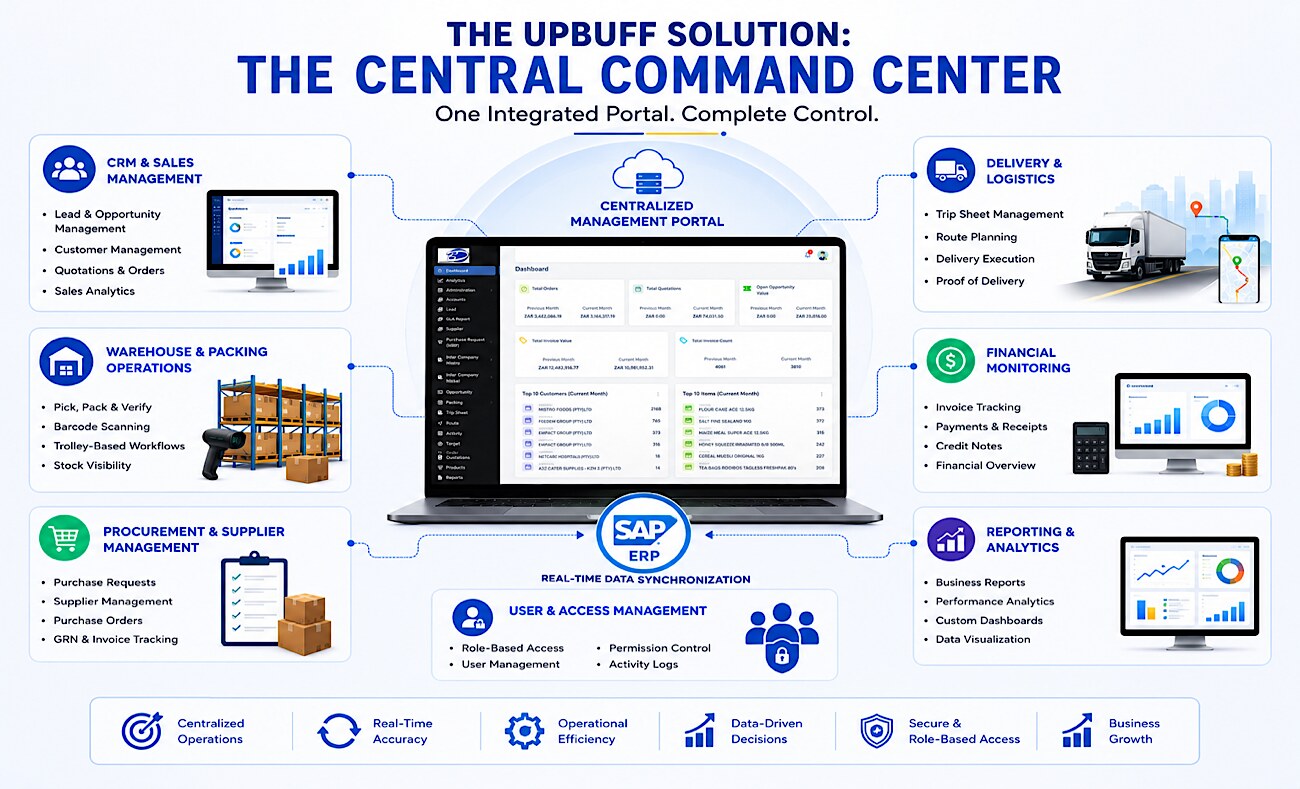 Global Trade & Logistics
 Bethalia Management Portal: Integrated Operations, Warehouse & SAP ERP Solution
How UpBuff unified Bethalia's global trade, warehouse, vansales, logistics, supplier, and intercompany operations into a single SAP ERP-integrated management portal — delivering real-time visibility and centralized control across every entity and field team.
 FMCG Distribution
 Building a Multi-Tenant Sub-Distributor Management Solution for 30,000+ Retail Outlets
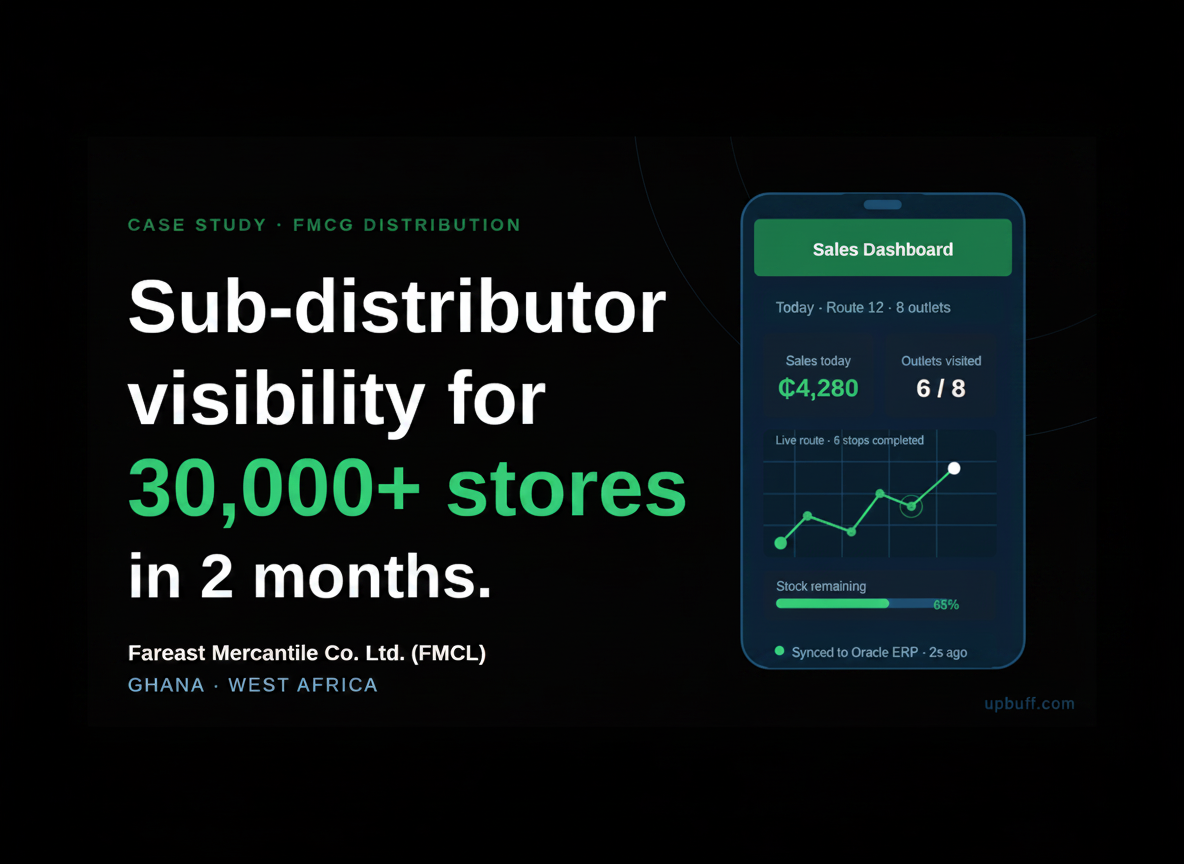
How FMCL gained complete visibility across its FMCG, FOOD1, FOOD2, and CADBURY business verticals — replacing paper-based sub-distributor billing with a geo-tagged, offline-capable mobile sales platform serving over 30,000 neighborhood stores in Ghana with 70%+ of the SubD network onboarded within 10 weeks of go-live.